Boundaries Aren’t Harsh - They’re Sacred

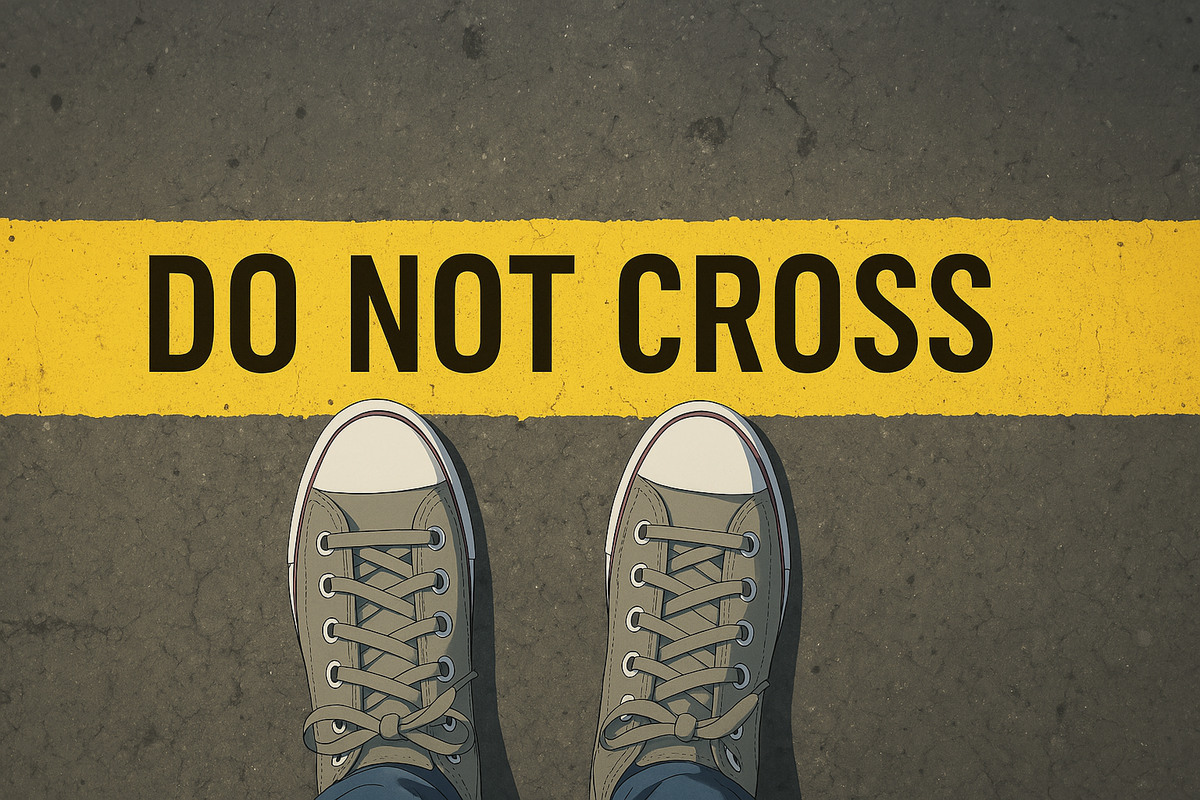
Stop apologising for protecting what's holy.
"A boundary isn't a wall. It's a doorway. It says: you can come in - if you honour the space."
Let's kill a myth right now.
Boundaries are not mean. They are not cold. They are not the weapon of difficult people or the strategy of the emotionally unavailable or the calling card of someone who loves badly.
Boundaries are medicine. They are the most honest form of communication available to a human being - a clear, unambiguous declaration of what you need in order to show up as yourself in any given relationship, any given room, any given moment.
They are sacred self-respect made visible.
And yet. You've been taught otherwise. You've absorbed, through years of conditioning - through family dynamics and cultural messaging and the slow drip of being rewarded for self-sacrifice and punished for self-protection - a very different story about what it means to have limits.
You've been taught that kindness means always being available. That love means always making room, even when it crushes you. That being a good person means being agreeable, accommodating, endlessly flexible - a fucking doormat with a smile and an apology ready for anyone who finds your existence inconvenient.
That story has cost you. More than you've counted.
This is where it ends.
What You Were Trained to Believe
The conditioning runs deep. Deeper, for most people, than they realise until they start trying to undo it.
I was five years old when mine was installed.
My dad was gone and somewhere in the wreckage of that, someone decided I needed to know - at five - that I was the man of the house now. That boys don't cry. That my job, from that point forward, was to look after everyone else. To be strong. To hold it together. To make myself useful rather than needy, steady rather than scared, available rather than struggling.
I was five. I had no idea what I was agreeing to. But I agreed anyway, the way children always agree to the emotional contracts adults hand them - not because it was right, but because it was the only option on the table.
And just like that, before I even had language for it, the story was written: your needs come last. Your feelings are a burden. The way to earn your place is to give everything and ask for nothing in return.
That curriculum - dressed up differently in different households, delivered with different words in different families, but converging always on the same core message - is where most of us started. Your worth is contingent on your usefulness. Your lovability is proportional to your agreeableness. The way to keep people, to keep connection, to keep the fragile peace, is to make yourself small enough to fit.
So you learned to read rooms before you entered them. To manage other people's emotions before your own. To swallow your discomfort and present a palatable version of yourself - one that required less from others and asked for almost nothing in return. You learned that the space between what you needed and what you were allowed to need was not something to be challenged. It was something to be quietly inhabited, indefinitely, without complaint.
You learned that saying no was risky. That it threatened the connection. That it marked you as difficult or demanding or selfish - all the words used, over time, to train you back into compliance.
And because you were a person who wanted to be good, who wanted to be loved, who wanted desperately to belong - you complied. Of course you did.
But here's what that compliance actually cost you, tallied up honestly over years: relationships built on a version of you that doesn't fully exist. A body that learned to hold what the mind refused to acknowledge - tension, exhaustion, the somatic record of every swallowed no. Resentment, growing quietly beneath the surface of every yes that should have been a no. A self that grew progressively harder to locate, buried under layer after layer of accommodation. The creeping, corrosive belief that your needs are too much - that you are, fundamentally, too much.
That is what a life without boundaries actually looks like. Not freedom. Not love. Not goodness.
Erosion.
"Boundaries don't disconnect you. They create the only real connection that matters - one built on truth."
The Real Definition
Before we go further, let's be precise - because boundaries have been flattened by overuse into something vague and self-helpy, and the concept deserves more rigour than that.
A boundary is not a punishment. It is not a threat. It is not a power play or a manipulation or evidence that you don't care.
A boundary is clarity. It is the honest articulation of where you end and another person begins. It is the line that says: this is what I will and won't engage with. This is what I need in order to stay present and real with you. This is how I honour my energy, my time, my body, my inner life.
It is the opposite of control - it makes no demands of the other person. It doesn't tell them what to do or who to be. It simply tells them who you are and what is true for you. What happens next is their choice entirely.
A boundary is not a wall. Walls are about exclusion - armour and isolation and the cold management of human contact. People who build walls aren't boundaried. They're defended. There's a profound difference.
A boundary is a doorway. It has structure and intention and clarity about what belongs inside and what doesn't. But it can open. It opens for people who are willing to honour the space. It opens for truth and genuine connection and relationships where both people are actually showing up as themselves.
That's not harsh. That's the architecture of real intimacy.
Because here's what no one tells you about boundaryless relationships: they are not close. They feel close - all that enmeshment, all that constant access, all that blurred-edge togetherness - but they're built on a foundation of unspoken resentment and performed accommodation. You're not really there. You're a version of yourself that was shaped to fit. And when the real you - the one with limits and needs and the occasional inconvenient no - starts to show through, the whole structure wobbles.
Real closeness requires edges. It requires two actual people, each with their own interior life, choosing each other freely. Not one person endlessly moulding themselves to avoid abandonment and calling it love.
Why You've Been Crossing Your Own Lines
Let's get honest about the mechanics of self-betrayal. Because most people aren't crossing their own boundaries out of stupidity or weakness. They're doing it out of fear. And until you name the fear precisely, it keeps running the show from behind the curtain.
For me, the fear had a very specific shape. It was the fear of being the one who caused the problem. The one who made things difficult. The boy who was told he was the man of the house - who learned at five that his job was to hold things together, not pull them apart - does not naturally become a man who rocks boats. He becomes a man who smiles through the rocking and tells everyone it's fine.
I smiled through a lot. Through friendships that were quietly taking more than they gave. Through business partnerships where I could feel the imbalance but told myself I was imagining it. Through a working relationship with a boss who used the access I gave him as a tool - who knew, because I had shown him, that I would keep showing up regardless of how I was treated. I had been trained from childhood to make myself available and call it strength. He simply took advantage of what I'd been offering everyone for years.
You've let people walk over your edges - over and over, in ways you knew were wrong even as they were happening - because you didn't want to seem difficult. Because you feared abandonment. Because you were scared of the silence that follows a no - that pause before you know how someone is going to respond, which can feel like standing on the edge of something. Because somewhere along the way you confused being liked with being loved, and liked felt safer, so you optimised for that.
And every time you crossed your own line - every yes that was a no, every smile worn over resentment, every moment you stayed present while your soul wanted to run - you sent yourself the same message the world had been sending you since you were small.
Your needs are not worth the risk of naming them.
Repeat that message enough times and it stops feeling like a message. It starts feeling like a fact. It becomes the operating system.
That is what this work is actually about. Not just learning to say no. It's about dismantling, belief by belief, the story that your needs are too much. That you are too much. That the cost of being fully yourself is more than any relationship can bear.
Because that story is a lie. A well-installed, deeply familiar, entirely convincing lie.
But a lie nonetheless.
The Grief Nobody Warned You About
Here is the part of this conversation that most boundary content skips, because it isn't comfortable and it doesn't make for a clean before-and-after narrative.
Boundary work is grief work.
I've lost friendships over this. Business partners. People I had invested years in, trusted deeply, built things with - who, when I finally stopped accommodating and started requiring reciprocity, simply revealed that they had never been interested in the reciprocal version of me. Some of them disappeared quietly. Some of them made noise on their way out, repositioning my evolution as betrayal, my finally holding ground as aggression.
And here's the thing nobody prepares you for: even when you can see it clearly - even when you know the relationship was built on an imbalance, that you were giving far more than you were receiving, that the dynamic was costing you in ways you can now name precisely - the loss still hurts. The version of connection you had with them, however imperfect, however costly, was still something. And grieving it doesn't mean you made a mistake. It means you're human.
But every single time I walked away - scared, grieving, unsure - there was something else underneath the fear. Something I hadn't expected.
Empowerment.
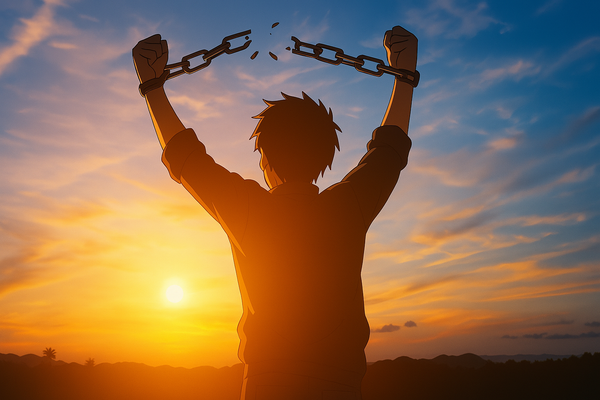
Not the loud kind. Not the triumphant kind. Just the quiet, solid, almost unfamiliar feeling of having chosen yourself. Of having held the line not because it was easy but because it was true. And discovering, on the other side of the fear, that you were still standing. That the world didn't end. That you were, in fact, more intact than you'd been before you drew the line.
Let yourself grieve it. And hold the line anyway.
"Your truth deserves a container. Your energy deserves a gate. Your soul deserves to stop bleeding out for people who refuse to meet you where you are."
What Boundaries Actually Do
Let's name the positive case - not just what you're protecting yourself from, but what you are actively creating when you start to live with genuine boundaries.
Boundaries do not shrink your world. Counterintuitively, they expand it. Because when you stop leaking your energy into every obligation and every relationship that takes more than it gives, something remarkable happens: you actually have something to offer the ones that matter.
You stop showing up depleted. You stop performing presence while feeling resentment. You stop giving from an empty account and calling it generosity - which was never generosity, only martyrdom, which serves no one and poisons everything it touches.
Real boundaries create safe containers for genuine connection - because when people know where you actually stand, they can trust that your yes means yes and your presence means presence. They create space for authenticity - yours and theirs. When you stop performing, the people around you have permission to stop performing too. Real edges invite real people.
They recover the energy that has been leaking, for years, into obligation and resentment. They slowly burn down codependency - that tangled, anxious, exhausting dynamic of building your identity around being needed. And they extend an invitation to everyone in your life: meet me here, in my truth, or find the exit. That sounds harsh. It is actually the most loving thing you can offer anyone - the chance to be in a real relationship with the real you.
And perhaps most importantly - boundaries begin to rebuild the relationship you have with yourself.
Because every time you honour a limit, every time you say the no that needs to be said and hold it without apologising it away, you send yourself a different message than the one you've been sending since you were five years old, standing in a house that needed you to be bigger than you were.
You send yourself the message: I am worth protecting. My needs are worth naming. The sacred within me deserves a container.
Repeat that message enough times and it starts to feel like a fact too.
A true one.
How to Actually Do This
The mechanics of boundary-setting are, in one sense, simple. They are also, in practice, among the hardest things a person can do - because they require you to tolerate the discomfort of another person's disappointment without rushing to fix it.
I know this from the inside. There was a boss - controlling, manipulative, the kind of person who had learned to read exactly how much he could take from someone before they broke - and I stayed far too long. Not because I didn't know what was happening. I knew. But the boy who'd been told to hold everything together at five does not easily become the man who walks into the office and says: this stops now.
The day I finally did it, I was nervous. My hands weren't entirely steady. Every conditioned instinct I had was screaming at me to soften it, to qualify it, to find a way to hold the line without making him uncomfortable. The old programme, running loud and clear: don't be difficult. Don't cause a problem. Find a way to make this work for everyone.
I held the line anyway.
And what came after the nerves - not immediately, but within hours, and then more solidly with each day that followed - was the same thing I'd felt walking away from the friendships and the business partners who had taken too much.
Empowerment. Quiet, solid, mine.
That's what's available on the other side of the shake. Not immediately - but with practice, with repetition, with the slow accumulation of evidence that the world does not end when you hold a line.
The words themselves don't need to be complicated. They don't need to be long. They don't need to be padded with explanation or softened with apology.
"No." "That doesn't work for me." "I'm not available for that." "I don't have capacity for that right now."
Say the no. Then stop talking. Let them respond. Let them feel whatever they feel. Sit in the silence and don't fill it with compliance.
That shake is not a sign you're doing something wrong. That shake is your nervous system recalibrating. It is proof that something real is happening.
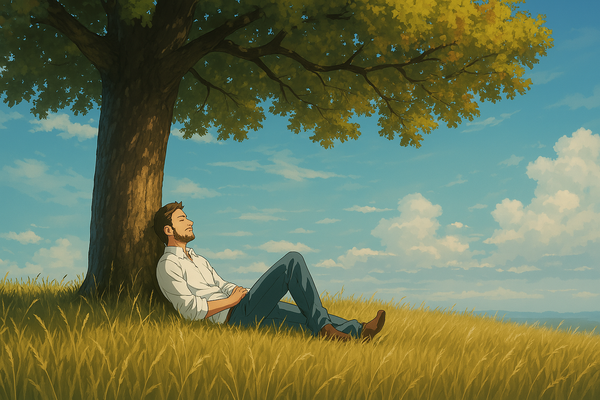
On the other side of it is the feeling of being at home inside yourself.
Questions Worth Sitting With
Not as a checklist. As an honest audit of where you actually are.
- Where am I still shrinking to avoid confrontation - and what am I most afraid would happen if I stopped?
- Who drains me consistently, and what story am I telling myself that justifies continuing to give them access?
- What am I afraid will happen if I honour my actual capacity instead of performing a limitless version of myself?
- Where have I been calling compliance kindness - and what has that cost me?
- What is the no I have been swallowing longest? And what would it feel like to finally say it?
Sit with those. Really sit with them. Not to manufacture immediate action, but to make contact with what is true - because the boundary always starts with the honest acknowledgement of what you actually feel, before the performance of what you're supposed to feel takes over.
The Truth About Who Gets Angry
One final thing, because it matters and because it will help you hold the line when the pushback comes - and it will come.
You are not responsible for other people's reactions to your boundaries.
When you set a boundary and someone reacts with anger, with guilt-tripping, with withdrawal, with the sudden reassessment of your entire character - that reaction is information about them. It is not evidence that your boundary was wrong. It is not proof that you are selfish or cold or difficult.
It is proof that your boundary was needed.
People who have healthy relationships with other people's limits do not react to a no with fury. They do not punish you for having edges. The anger - when it comes, and it will - is not anger at your boundary. It is anger that the access has been revoked. That you, who were previously available for whatever was asked of you at whatever cost to yourself, are no longer operating on that basis.
I've watched this play out with people I genuinely cared about. The ones who reacted to my finally holding ground with the most hostility were, without exception, the ones who had benefited most from my not doing so. Their anger told me everything I needed to know. Not that I had been wrong to hold the line - but that I had been wrong to wait so long.
Every time you choose guilt over clarity - every time you collapse the boundary to make someone else more comfortable with the uncollapsed version of you - you hand your power back to the part of you that still believes being liked is more important than being free.
Being liked is not the same as being loved. Being easy is not the same as being valued. Being available is not the same as being connected.
You have spent long enough optimising for the wrong thing.
Sacred Architecture
Your boundary is not a threat. It is not an act of aggression or an expression of hostility or a sign that you have stopped caring.
It is an invitation. The most honest one you have ever extended.
It says: here is where I actually am. Here is what is actually true for me. Here is the real me - not the performed, accommodating, endlessly available version you may have grown used to, but the actual one, with limits and needs and the hard-won knowledge of what I will and will not continue to give.
Meet me here. In this truth. And we can build something real.
Or don't. And find the exit. Because I would rather be alone in my truth than crowded out of it by relationships that require my disappearance as the price of entry.
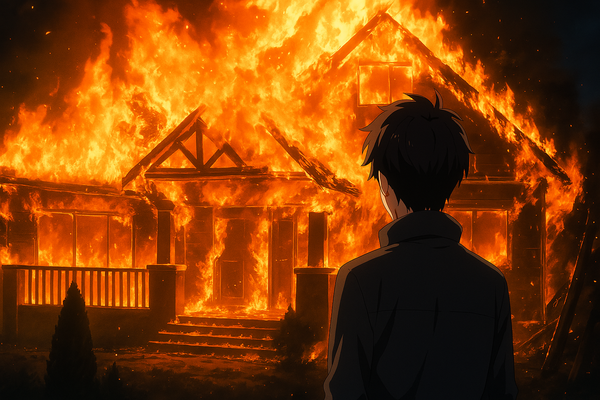
This is sacred architecture. It is the structure that makes a real life possible - not the performance of a life, not the managed, resentment-soaked endurance of a life, but an actual one, inhabited fully, by the actual you.
The five-year-old who was handed the weight of a household and told to carry it without complaint - he deserved better than that. And so do you. You have been the man of the house, the one who holds it together, the one who never shows the cost, for long enough.
Your truth deserves a container. Your energy deserves a gate. Your soul deserves to stop bleeding out for people who have never once asked how much it cost you.
So draw the line.
Hold the line.
Become the line.
And let whoever cannot handle your wholeness find the exit.
They were never staying for the real you anyway.
The ones who are meant to be here will not flinch at your edges.
They will recognise them as the shape of someone who finally came home to themselves.
And they will stay.