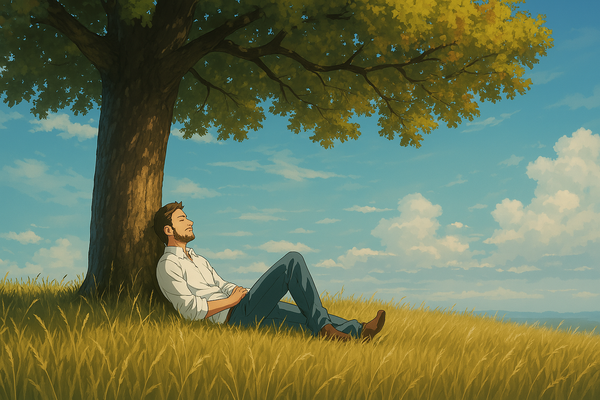
Don’t Confuse Numbness with Peace

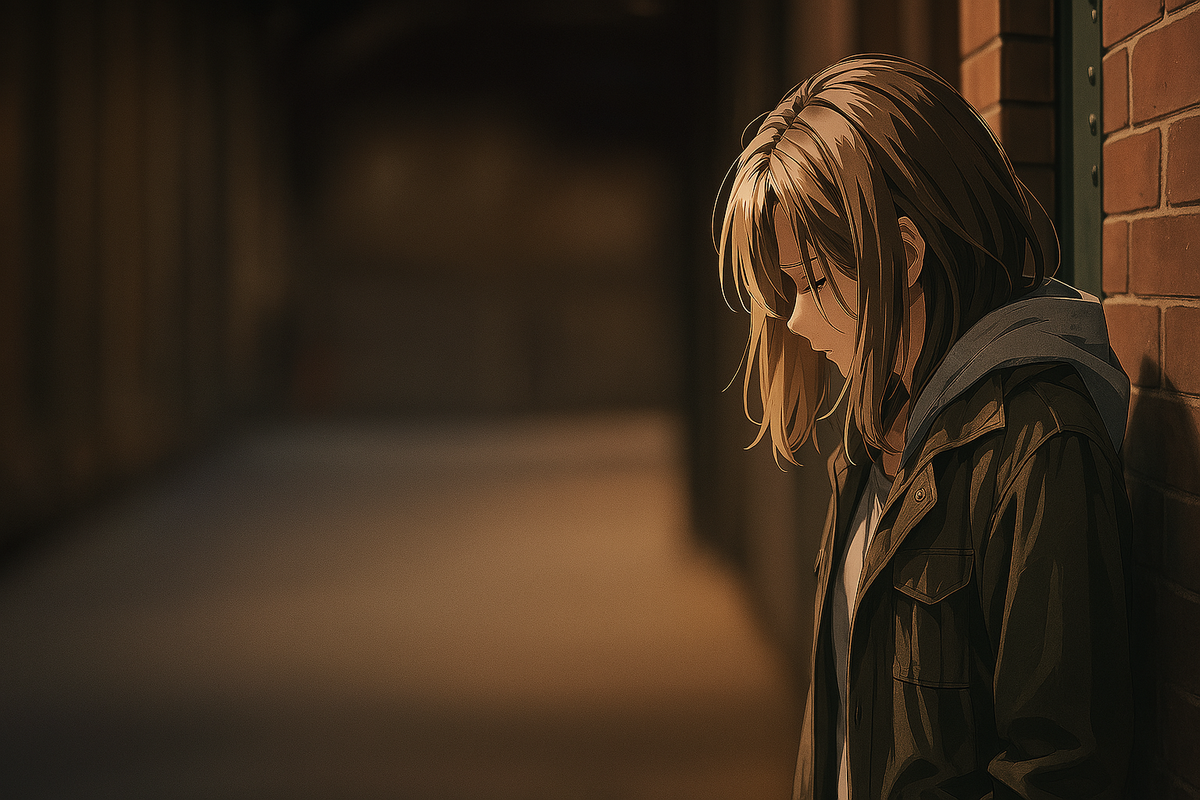
If you had to kill your aliveness to "heal," you didn't heal. You dissociated.
"Peace is not the absence of feeling. It's the capacity to hold all of it without becoming it."
We need to talk.
Because somewhere along the way, in the feed and the podcasts and the wellness content and the breathwork retreats, someone sold you a very convincing lie.
The lie that flatlining is freedom.
That the goal of healing - of doing the work, of growing, of evolving as a human being - is to arrive at a place where nothing touches you. Where you don't react. Where you float above it all, serene and detached and unmoved, like a monk who has transcended the inconvenient business of being alive.
If you don't react, you're evolved. If you don't feel, you're stable. If nothing rattles you, you're enlightened. If you stay quiet and still and sufficiently detached - you've made it.
I bought into this. For longer than I'd like to admit. I mistook going quiet inside for going deep. I thought the flattening was progress. It wasn't. And I've sat with enough of my own numbness - on the mat, in the woods, in the long silences after the kids are in bed - to know the difference now.
You didn't heal. You shut down. And the tragedy isn't just the suffering - it's that you've been taught to call that suffering spiritual progress.
The Difference Nobody Talks About
There is a difference between peace and numbness. A profound, life-altering difference. And the reason so few people can name it is that from the outside - and sometimes from the inside too - they look almost identical.
Both are quiet. Both appear calm. Both present as someone who isn't visibly falling apart.
But underneath? They are opposite states.
Peace is embodied. It's alive. It breathes with you. It's the state of a person who has moved through something - genuinely moved through it - and come out the other side still intact, still feeling, still present to their own life. Peace doesn't mute the world. It clarifies it.
Numbness is something else entirely. Numbness is the soul holding its breath indefinitely. Your nervous system - brilliant, adaptive, desperately trying to protect you - deciding at some point that the safest option was to freeze. To go offline. To stop transmitting.
And it worked. For a while. That's the thing about numbness - it's an extraordinarily effective short-term solution. When the pain is too much, when the overwhelm is too great, when life hands you something your system genuinely cannot process in real time, shutting down is a mercy. It's your psyche performing emergency surgery on itself.
The problem is when you forget it was ever temporary. When the freeze becomes your baseline. When you start building an identity around the absence of feeling and calling it growth.
That's not Zen. That's a coping mechanism that has overstayed its welcome, put on a linen shirt, and started burning sage.
"You're not above the noise. You're just disconnected from yourself."
The Masks Numbness Wears
Here is what makes this so difficult to catch: numbness is fluent in the language of wellness.
It has learned to dress itself in the vocabulary of growth and healing and spiritual development. It sounds reasonable. It sounds evolved. It sounds, honestly, like something you'd find on a motivational account with a hundred thousand followers.
"I'm just protecting my energy." "I don't let things affect me anymore." "I'm staying out of drama." "I've moved past that.""I'm just vibing." "Nothing really matters anyway."
Each of those statements can be genuinely, beautifully true - when they come from a person who has done the actual work and arrived at real equanimity.
But they can also be armour. Defence dressed as wisdom. The intellectual justification for a nervous system that decided, at some point, that feeling was too dangerous to risk.
I've said some version of all of them. And I've meant them both ways - sometimes the same week. The difference isn't in the words. It's in what lives underneath them.
A person at genuine peace can still be moved. Still hurt, still delighted, still surprised by beauty, still brought to tears by something that matters. Their peace is not a wall - it's a foundation. It allows them to feel everything precisely because they trust that feeling won't destroy them.
A person who is numb? They've built the wall and called it a foundation. The feelings are still there - every single one of them. They haven't gone anywhere. They've just been pushed underground, where they continue doing their work in the dark: leaking out as irritability, as low-grade depression, as the persistent sense that something is missing, as the strange grief of watching your own life from a slight distance and never quite feeling like you're in it.
How You Got Here
You've been through things. Difficult things. Maybe one catastrophic thing, maybe just the slow accumulation of smaller wounds over years - disappointments, betrayals, losses, the particular exhaustion of caring deeply in a world that often doesn't care back. Maybe you grew up somewhere that feeling too much was unsafe, where your emotions were inconvenient or embarrassing or punished, and you learned early that the smartest move was to turn the volume down.
And at some point, your system said: enough.
For me, the numbing wasn't subtle. I didn't quietly detach and call it growth - I was far less sophisticated than that. I became a master at it. Alcohol. Drugs. Whatever was available and whatever worked fastest to get me to the other side of whatever I was feeling. I didn't just use them socially or occasionally. I used them deliberately, expertly, relentlessly - the way you use a tool you've spent years perfecting. Every uncomfortable emotion, every moment of silence that felt too loud, every truth that was starting to surface - I drowned it before it could reach me. I got very, very good at not feeling.
And here's what nobody tells you about that level of numbing: it works. That's the trap. It genuinely, effectively works. The pain goes quiet. The edges soften. The thing you couldn't face becomes, at least for tonight, faceable. So you do it again. And again. Until the numbing isn't a response to pain anymore - it's just the operating system. The default state. The thing you do not because something is wrong but because feeling anything at all has started to seem like the problem.
It was only when I came out the other side of that - through breathwork, through the uncomfortable stillness of nature, through the slow and unglamorous process of actually sitting with myself - that I understood what I'd been doing. I hadn't been coping. I'd been disappearing. Installment by installment, drink by drink, hit by hit. Not dramatically. Just steadily. Until the person looking back at me in the mirror was functional, presentable, fine - and almost entirely absent from his own life.
That survival mechanism saved me in its own way. There is no shame in having done what you needed to do to get through what you got through. But I also can't pretend it was healing. It was the opposite of healing. It was the most sophisticated avoidance I've ever witnessed - and I was both the architect and the casualty.
You mistook your defence mechanism for your destination. I did too. For years.
What Numbness Actually Looks Like
Because it is so rarely dramatic, numbness is one of the most commonly missed forms of suffering in modern life. So let's make it concrete.
Numbness looks like high-functioning burnout - showing up, delivering, performing, while feeling absolutely nothing about any of it. It looks like being present in the room but not in the connection - going through the motions of intimacy without actually landing inside it. It looks like saying "I'm fine" with a face that doesn't quite match, and meaning it, because you genuinely can't locate anything more specific than fine.
It looks like not crying for years - not because things haven't been hard, but because the mechanism for it seems to have quietly switched off. Not laughing deeply either - not the real kind, the kind that comes from your gut and surprises you. Not creating anymore, not hungering for expression, not feeling the pull toward the things you used to make or build or pursue.
Just floating. Managing. Maintaining. Safe, but sedated.
And here is the cruelest part: nobody questions it. Because you look stable. You look low-maintenance. You look, to every casual observer, like someone who has got it together.
But deep down - in the part of you that still remembers what it felt like to be fully present - you know something is off. There's a muted quality to everything. A glass wall between you and your own experience. A persistent, inexplicable flatness that no amount of productivity or self-improvement seems to touch.
That's not a character flaw. That's not ingratitude. That's not just who you are now.
That's what it feels like to be alive but not inhabiting your aliveness.
"Peace is not the absence of feeling. It's the presence of truth that doesn't need to scream."
What Real Peace Actually Feels Like
If you've been numb long enough, you may have genuinely forgotten what you're aiming for. So let's name it clearly.
Real peace isn't cold. It's clear.
It doesn't mute your experience - it sharpens it. It gives you the capacity to feel everything without being consumed by any of it. Grief. Joy. Rage. Tenderness. Frustration. Awe. The full, inconvenient, magnificent symphony of being conscious on a planet that keeps handing you things to respond to.
I feel this most after breathwork - when something that had been locked in my chest for weeks finally moves. Or on a long walk in the fields near my house, when I stop trying to think my way through something and my body just... knows. That's not absence of feeling. That's feeling trusted enough to do its job.
A person in genuine peace can sit with hard emotions without being destroyed by them. They can feel rage without becoming it. Grief without drowning. Fear, and move toward the thing anyway. They can be affected - deeply, visibly, humanly affected - and still know, somewhere underneath it all, that they are okay.
That security doesn't come from not feeling. It comes from having developed a relationship with your own inner life that is trustworthy. From knowing, through experience, that you can handle what arises. Not because it won't hurt - it will - but because you've been present through enough of your own pain to know it doesn't last forever and it doesn't define you.
You were not born to be grey. You were born to feel hard and live loudly. To give a shit. To be moved. To risk caring. To roar and weep and create and rage and love with the volume turned all the way up.
Anything less than that is spiritual starvation. And you've been hungry long enough.
The Way Back
Coming back from numbness is not dramatic. It does not require a breakdown or a revelation or a single transformative moment where everything cracks open at once.
It is slower and quieter and more ordinary than that. And it begins not with force, but with permission.
The first time I genuinely let myself feel something I'd been managing for months - really let it, in a breathwork session, without shutting it down before it arrived - it wasn't cathartic in the way I expected. It was just honest. Quiet. Like something exhaling after a very long time of holding on. A stark contrast to years of reaching for a drink or something stronger to make the same feeling disappear.
You don't bulldoze your way back to feeling. You breathe back into your body. That's where it starts - because numbness lives in the body, in the nervous system, in the places where sensation went quiet when things got too hard. And returning to feeling means returning to the body first.
You move slowly. You pay attention to small things. You let one honest tear fall without shutting it down before it arrives. You say one thing you've been swallowing - to yourself if not to anyone else - and you notice what it feels like to let it exist outside of you. You feel one sacred pulse of rage at something that actually warranted it, and you don't immediately talk yourself out of it. You do one thing your numbness would rather you avoided - something small, something real - and you stay present for what comes up.
Bit by bit. Layer by layer. You thaw.
The first feelings to return when numbness starts to lift are often not the pleasant ones. Grief arrives with the receipts for everything you were too frozen to feel at the time. Anger surfaces. Old pain resurfaces. There may be a period where you feel worse before you feel better - more raw, more exposed, more vulnerable than you've allowed yourself to be in years.
Stay with it. That's not regression. That's the thaw.
What you're moving toward, on the other side of all that, is not emotional chaos. It's something you may not have experienced in a very long time:
The feeling of being fully present in your own life.
Questions Worth Sitting With
Not as a journalling exercise. Not as content. As genuine inquiry into where you actually are right now.
- What emotions have I quietly exiled in the name of being calm?
- What part of me is terrified of feeling again - and what is it protecting me from?
- Where have I called numbness peace because real peace felt too exposed, too much?
- What would I feel if I actually slowed down right now and let myself feel something?
- What have I been swallowing for so long I've forgotten I was swallowing it?
Sit with those. Not to fix anything. Just to make contact with what's true.
Because the path back from numbness starts with honesty - the kind that doesn't perform and doesn't package and doesn't arrive dressed in the language of growth. The kind that simply says: something is off. I know something is off. And I am finally willing to look at it.
Wake the Fuck Back Up
You are not meant to be a statue of stability. You were not put here to manage yourself into a life so carefully controlled that nothing can touch you.
My kids taught me this without trying. Watching them - fully in it, every emotion arriving without apology, no filter between what they feel and what they express - I don't see chaos. I see aliveness. And somewhere in observing that, I started to grieve the parts of myself I'd quietly retired in the name of being stable. The parts I'd drowned for years before I even knew what I was doing.
You are meant to be moved. To be surprised. To be broken open by beauty and put back together by love and undone by loss and rebuilt by your own extraordinary capacity to keep going anyway.
Stop confusing spiritual detachment with embodied presence. Stop mistaking chill for checked out. Stop building an identity around being unshaken when your soul is desperate to quake.
You didn't come here to go numb. You came here to feel everything - the unbearable and the transcendent and the mundane and the devastating and the ridiculous and the sacred - and still, through all of it, choose truth. Choose presence. Choose to stay in your own life rather than hovering at a careful distance from it.
That is peace.
Not empty. Not cold. Not curated for consumption or performance or the comfort of people who find your aliveness inconvenient.
Alive. Honest. Awake.
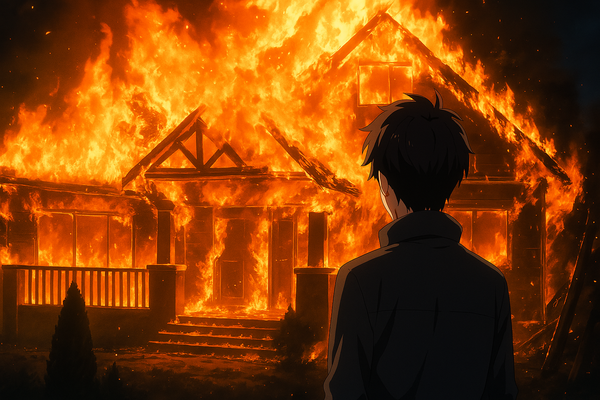
The fire in you didn't go out. It's been waiting, banked low, for you to stop mistaking its absence for safety.
Come home to it.