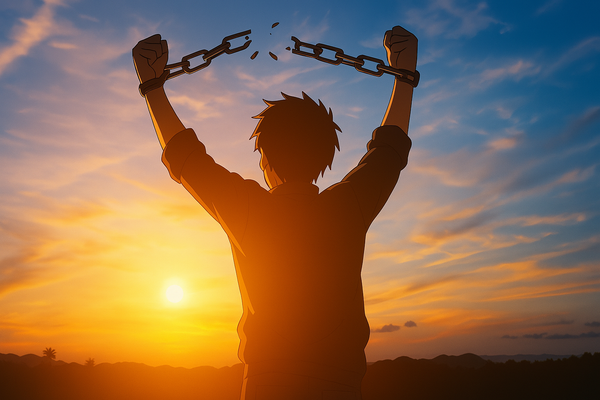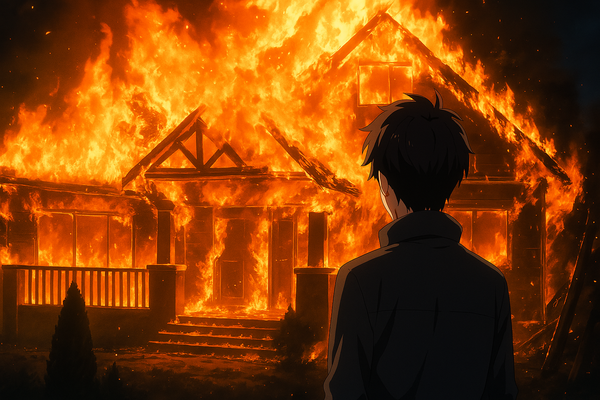
Stillness Is Where Your Truth Lives

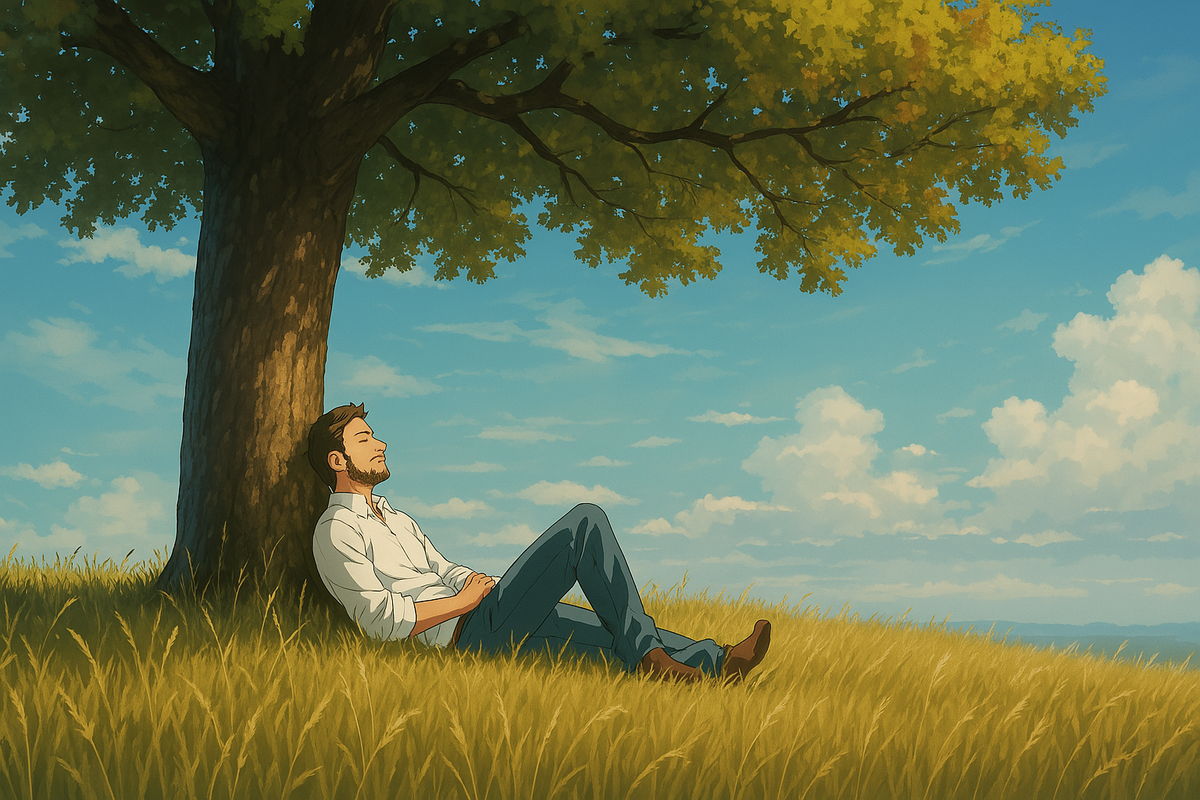
But most people are too busy escaping it.
"Stillness doesn't fix you. It reveals that you were never broken."
In a world that worships movement, stillness is rebellion.
When you stop? Really stop? You exit the algorithm. You fall out of sync with a culture addicted to speed, sound, and the relentless performance of doing. You become briefly, beautifully illegible to a system that only knows how to measure your output.
Stillness is not trendy. It's not performative. You can't post it. You can't monetise it. You can't optimise it or add it to your morning routine as evidence of self-improvement.
Which is exactly why no one teaches you how to hold it.
Because stillness isn't cute. Stillness is confronting. And a world built on your distraction cannot afford for you to sit down, go quiet, and actually meet yourself.
What You're Actually Avoiding
Most people don't avoid stillness.
They avoid what stillness shows them.
There is a difference. A profound one. Stillness itself is neutral - it asks nothing of you except your presence. But presence, for most people, is the most terrifying thing on offer. Because when the noise fades, when the to-do list loses its grip, when the phone goes dark and the performance stops -
Your truth shows up.
And sometimes that truth is fucking uncomfortable.
- This job is killing me
- This relationship has been dead for years
- I'm addicted to performance - to being seen, to being needed
- I don't know who I am without the doing
- I'm scared of being alone with myself
- I've spent my entire life running, and I'm exhausted
- I have no idea what I actually want
Stillness doesn't create that discomfort. It reveals it.
The discomfort was always there - underneath the meetings, the scrolling, the busyness dressed up as purpose. You just kept moving fast enough to stay one step ahead of it. But here's what nobody tells you: the truth you're outrunning isn't your enemy. It's the most important conversation of your life. And it's been waiting, patiently, for you to finally sit still long enough to hear it.
That's where the power begins.
"Busyness is often just avoidance with a to-do list."
What Stillness Actually Is
Let's be precise about this, because stillness is one of the most misunderstood states available to a human being.
Stillness isn't the absence of motion. It's the presence of presence.
It's the moment you stop reacting. Stop consuming. Stop spinning your wheels in the relentless effort to earn your place on a planet you were born worthy of. It's the moment the gap between stimulus and response finally opens wide enough for you to exist inside it.
It is not emptiness. It is not boredom. It is not laziness wearing a philosophical hat.
Stillness is the state in which you are most fully yourself - before the world gets to you, before the roles kick in, before you start performing the version of you that you've convinced yourself is required for survival.
In stillness, the soul finally gets a word in.
Most of us have spent so long drowning that out - with work, with noise, with the cheap relief of someone else's content filling our skulls at every available moment - that we've forgotten what our own signal even sounds like. We've become strangers to ourselves. Fluent in everyone else's frequency. Mute on our own.
Stillness is the return.
It's the moment, if you can bear it, when something in you exhales and says:
"There you are. I've been waiting."
What Society Trained You to Believe
You didn't arrive at your avoidance of stillness by accident. You were trained into it.
From the moment you were old enough to absorb the world's messaging, you were handed a set of invisible rules about the value of a human being. And those rules were never about being. They were always about doing.
- Rest equals laziness
- Quiet equals unsafe
- Stillness equals unproductive
- Doing nothing equals failure
- Slowing down equals falling behind
So you learned to fill every gap. Every pause. Every moment of potential silence became a wound that needed dressing - with scrolling, with overworking, with overthinking, with the endless search for external validation that might, just this once, make you feel like enough.
Because it's easier to feel distracted than to feel you.
It's easier to be busy than to be honest. Easier to keep moving than to sit with the weight of what you've been carrying. Easier to consume than to confront.
The system isn't broken. It's working exactly as intended. A person in perpetual motion doesn't ask dangerous questions. They don't examine the life they've been handed and decide it doesn't fit. They don't realise that half the desires driving them were never theirs to begin with - they were installed by a culture that profits from your insecurity.
Stillness breaks that spell. Which is why, on some level, everything around you is designed to prevent it.
It's Holy As Fuck
Here's the wild truth that nobody's selling, because you can't package it, you can't put it on a webinar, and you cannot build a subscription model around it:
Stillness is not empty. It is holy.
It's where grief finally moves - because you've stopped running long enough to let it catch up. It's where wisdom lands, quietly, without fanfare, in the space between one breath and the next. It's where clarity pierces through all the noise and distraction and performance you've been covering it with, and says something so simple you almost miss it.
It's where your truth doesn't need to shout anymore - because you're finally listening.
The irony is devastating. We are a civilisation of people who have outsourced our inner lives to devices, to other people's opinions, to the next achievement, to the next dopamine hit. We have built elaborate, exhausting systems for never having to sit alone with ourselves. And then we wonder why we feel so profoundly, inexplicably lost.
You are not lost because you lack direction. You are lost because you have stopped listening to the only voice that actually knows where you need to go.
Your own.
And that voice? It doesn't broadcast. It doesn't compete with the noise. It doesn't push notifications or run algorithms designed to hijack your attention.
It whispers. And it only whispers in the quiet.
The Confrontation You've Been Avoiding
I want to be honest with you about what stillness actually requires, because too much wellness content wraps this in soft language and gentle promises, and that's a disservice.
Stillness requires courage.
Not the dramatic kind. Not the kind that gets you applause or admiration. The quiet, unglamorous courage of sitting in a room without distraction and letting whatever is true about your life rise to the surface. That takes more bravery than most people want to admit, because what rises is not always comfortable.
What rises might be grief you've been deferring for years. What rises might be anger at choices you've made, or compromises you've accepted, or a version of your life that looked right from the outside but has been slowly suffocating you from within.
What rises might be the terrifying recognition that you have built an entire identity around doing - and without the doing, you're not entirely sure who's there.
That is not a comfortable thing to meet.
But here is what I need you to understand: that recognition, however painful, is not a diagnosis. It is not evidence that something is wrong with you. It is the beginning of something real. It is the moment you stop performing your life and start living it.
The discomfort of stillness is not a sign to run. It's a signal to stay.
Because what's underneath that discomfort is you. Not the curated version. Not the strategic version. Not the version you've assembled for public consumption. The real you - the one who doesn't need applause to exist, who doesn't need to be productive to have value, who was whole long before the world started measuring you.
"Stillness doesn't fix you. It reveals that you were never broken."
What Stillness Actually Does
When you stop running, something important happens. Not immediately - the first wave is usually just the noise you've been carrying. The mental to-do list. The anxiety masquerading as planning. The thoughts that feel urgent but are mostly just the withdrawal symptoms of a mind that has forgotten how to rest.
Let them come. Let them pass.
Because underneath that layer is something else entirely. Stillness, practiced with patience and without agenda, does things that no productivity system, no therapy app, no wellness retreat can replicate.
- It recalibrates your nervous system - returning you from survival mode to something that resembles actual presence
- It lets you integrate your experiences instead of accumulating them as unprocessed weight
- It restores access to your intuition - the quiet knowing you've been drowning out with logic and noise
- It helps you feel your actual desires, not the ones fed to you by a culture selling you someone else's life
- It burns off the performance layer - slowly, honestly, layer by layer - until what's left is just you
Stillness is resistance in a world that profits from your restlessness.
Every time you choose it - genuinely, not as an optimisation hack or a wellness trend - you are saying something that the system finds deeply threatening:
I will no longer let urgency dictate my worth.
That is a revolutionary act. A quiet one. One that no one will repost or reward. But it rewires you from the inside out - and that kind of change lasts.
The Return
There is a practice I want to offer you. Not as a technique. Not as a productivity tool. Not as something to add to your morning routine so you can feel better about yourself before the noise begins.
As a return.
Every day, ten minutes. No phone. No music. No goal. No right way to do it and no wrong way to fail.
Just sit. Breathe. Feel whatever is there.
If emotion comes - let it. If nothing comes - beautiful. You are not there to perform presence. You are there to practice it. Those are completely different things.
Notice the part of you that wants to escape. Notice the flinch at the first moment of real silence. Notice the urge to check something, fix something, think about something more productive than simply being here.
That urge is not your enemy. It's information. It's showing you exactly how much of your life has been spent at one step removed from yourself.
Stay anyway.
Ask yourself - not as a journalling prompt, but as a genuine inquiry into the texture of your own life:
- What do I fear will happen if I slow down?
- What emotions or truths do I drown out with noise?
- Where am I confusing stillness with stagnation?
- When was the last time I did nothing - and let it be enough?
There are no correct answers. There is only the willingness to actually ask.
You're Not Missing Anything
Stillness won't make you more productive. It won't make you more impressive at dinner parties. It won't give you anything the world knows how to measure.
What it gives you is harder to explain and infinitely more valuable.
It gives you you.
The you beneath the noise. The you behind the stories you've been telling yourself about who you have to be. The you that existed before the world started handing you identities and you started believing that wearing them well was the same thing as being alive.
Presence is the point. Not progress. Not performance. Not the relentless accumulation of experiences and achievements and evidence that your life is being lived correctly.
Just this. Just here. Just the quiet, radical, deeply unfashionable act of being in your own life.
So stop. Breathe. Be.
Let the world spin. Let the feed scroll without you. Let the noise continue for others who haven't yet discovered that they can simply opt out.
You are not missing anything.
You are arriving.